Beijing to Ulaanbaatar Train - K23 - 2026 Travel Update
There isn't a lot of information available lately online about the train between Beijing to Ulaanbaatar (k23) so I wanted to share my recent recent experience :)
My partner and I took this train in the beginning of May 2026. It was a beautiful experience and a great way to experience slow travel though the Chinese and Mongolia countrysides (think small villages, open deserts, large plains, some little mountains!).
If you’re curious about this train - I would recommend it!
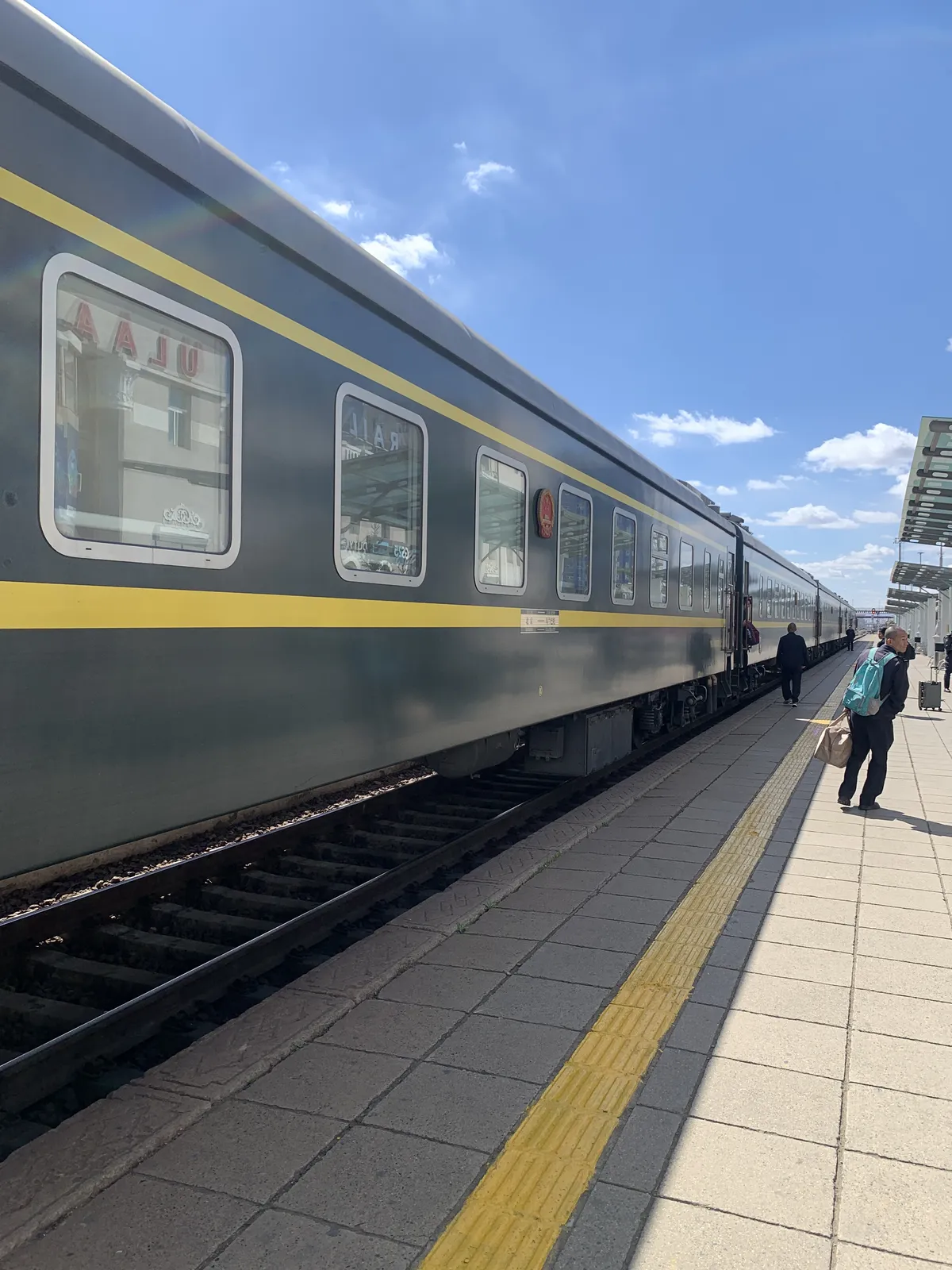 Photo of our K23 train at the end of our journey
How to book tickets
We booked our tickets in person. I had read that you should book in advance only during peak season for travel in Mongolia (June-August), so we were OK to risk it and book our tickets in person. You save on costs if you book in person, rather than online through 3rd parties.
To book in person, you must go to the China International Travel Service (CITS) Head Office. It’s on the 7th floor of a building called the CITS Building (Tower or Mansion) in Dongdan Beidajie. Like everything in China, you must have your passport with you when you are there to book. Make sure that the passport number on your ticket matches your passport.
We were able to pay for our tickets using Alipay but credit card payment is available too (or you can link your foreign credit card to Alipay anyways). They do not provide a digital copy of your tickets, so make sure to not lose them!!
You cannot book this train ticket at Beijing train station (we tried) but you can book your tickets online with other agencies. There are few different companies that do this and you may likely pay $20-30USD more for each ticket this way (but this does allow you to book in advance and secure a spot). Even if you book online, you will still need to get your paper tickets as this train doesn’t allow digital tickets. I read that most of these agencies will deliver the tickets to your hotel/hostel or you can go to their offices to pick them up.
In total, for hard sleeper, we paid 1379 Chinese Yuan for each bed in person.
Seating options
When booking, you can choose between “hard sleeper”, “soft sleeper”, and “deluxe sleeper”. My understanding is that “hard” and “soft” options are both in a 4-bed room (berth), but the soft option just has literally softer beds and a little more space (although I couldn’t see much difference). The deluxe room has only 2-beds and provides you with a reading chair (and I believe your own bathroom).
We had booked the hard sleeper option as it was the cheapest. Since it was still low season in May, the train was very empty so my partner and I had our own room (berth) to ourselves! This definitely was a huge perk as I do think sharing the hard 4-sleeper room with 2 other strangers would’ve been tight given the small space and the amount of bags and snacks we had.
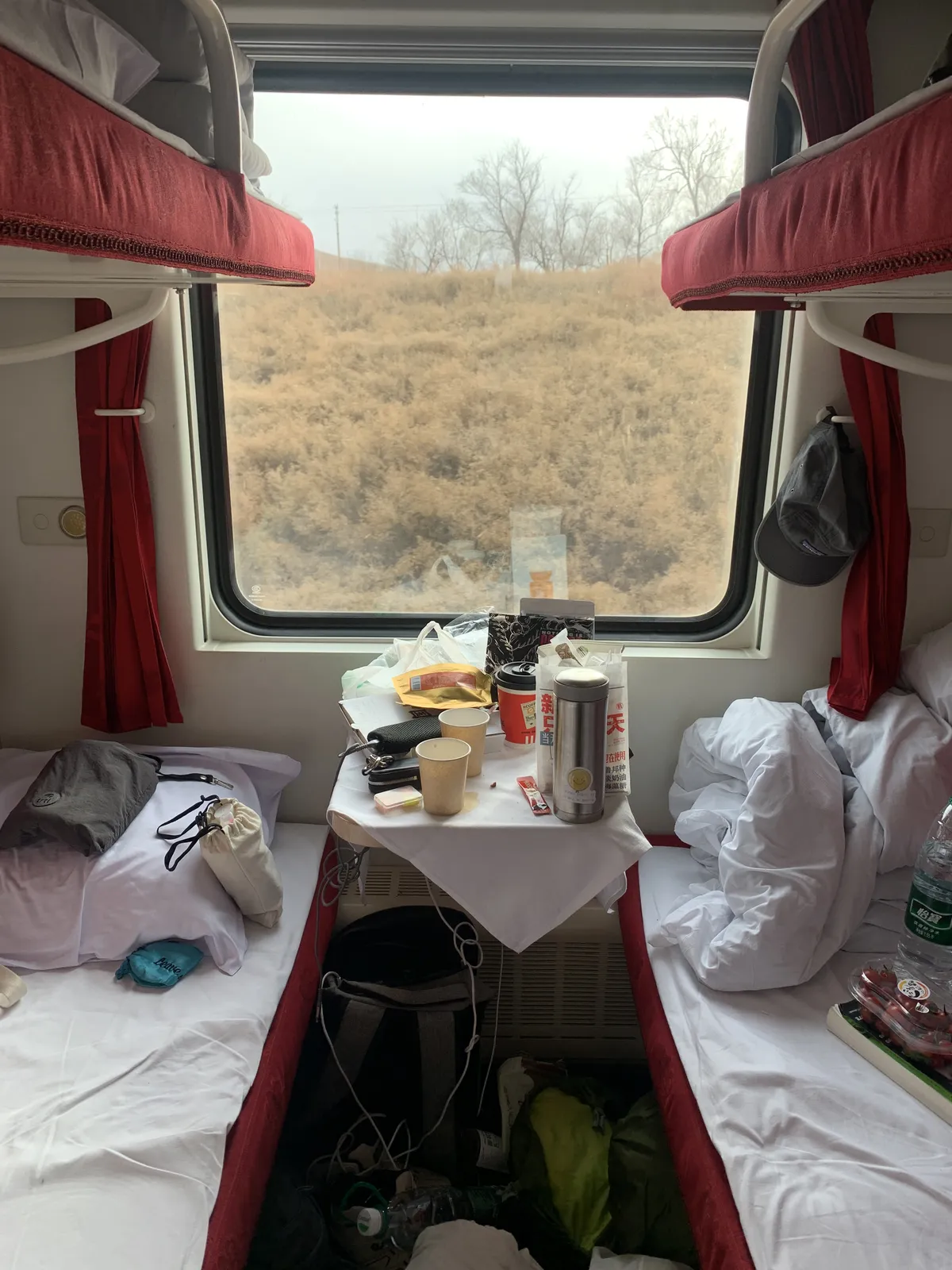 Our very messy hard sleeper berth!
Beijing Railway Station
The train boards at Beijing Railway Station (the main station). You will need to enter using your passport, as well as your ticket. If you have a foreign passport, the electronic scanners at the entrance to the station likely won’t work for you so just go to the line with the staff member and they will check your passport. If your passport # doesn't match your ticket #, they will not let you in.
Our K23 train was scheduled to depart at 7:27am. It usually leaves every Tuesday from Beijing but this is changing to Saturdays in June I believe. When we booked, they said to check-in 40 minutes early. Once we were there, they told us that boarding was open until 5 minutes before (which gives you lots of time to get snacks). The walk from the ticket gate where you board to the platform of the train can be a bit long and our train left 1 min early so I would definitely recommend boarding at least 15 minutes early though.
The Beijing Railway Station is on the subway line 2, so it's super easy to get to. There are also tons of food and grocery options available before 7am, including fresh coffee! I actually bought a latte from KFC (just to say I’ve tried Chinese-KFC, which are everywhere here). We bought large bottled water and some snacks for the trip there too. We looked a little bit for an ATM at the station (just in case we needed cash) but we couldn’t find anything inside the station. Thankfully we didn’t need any cash on the train anyways as credit card payments are ok now.
Train Layout
The train is laid out by sleeper class type, so your entire car will be the same sleeper type. I think our train had around 11 or 12 cars, with one car being the dining car and one car being for staff only. For our class, our car had 2 shared bathrooms, one common sink area, and one hot water tap built into the train. The bathrooms stayed in good quality throughout the ride and there was actually toilet paper stocked the entire time (although our train car likely was only 20% booked so I definitely still bringing your own toilet paper). There are no showers on the train. The common sink area had soap but I would recommend bringing your own too (as not all sinks had soap). The hot water dispenser works great and we used this to make coffee and drink water. There is no cold water available on the train but you can drink the hot water. They might sell water bottles in the dinning car but I didn't see any.
For our room, with the hard sleeper class, we were able to store our bags under the bottom bunk beds. Each room has a little table that hangs from the wall that we used for snacks, as well as 1-2 plug sockets (with a US plug) so you can charge your phone. Our room also had a lock on it (only locks from inside) and the window was curtains. The beds were definitely hard haha, as were the pillows, but it was still pretty cozy. The curtains are also slightly translucent so I would recommend bringing an eye mask. Each room has some hooks as well for clothing and we even had a few clothing hangers.
During the day, our beds did not turn into seats as I have seen on other sleeper trains. This was ideal for us as it meant we could nap during the day, but keep this in mind if you are sharing the room with other people (as they may want to sit on the bottom bunk bed during the day to socialize).
A major downfall for me on this train was that smoking is allowed between the train cars. The guests next to us, as well as so many of the train’s staff, smoked down the hall from us and the smoke then came through the ventilation system into our berth. This meant for a good chunk of the trip I was smelling smoke in our room.
Another downfall was the heating. For some reason, on the 2nd day of travel, our train car reached around 30 degrees. You cannot open your window in your room, so with the heat and the smell of smoke it was a bit much haha. I’m not sure why it was just our car haha - the dining car stayed at a great temperature so you will always have a place to hang if it heats up too much!
The entire train is decorated with red curtains and red bedding, giving it a very old school Chinese/Soviet feel. The train is also entirely carpeted, which feels strange in China (as I feel I saw very little carpets in public spaces there). We had brought disposable slippers from our last hostel in Beijing and used those slippers when walking around. It made it all feel luxurious to me.
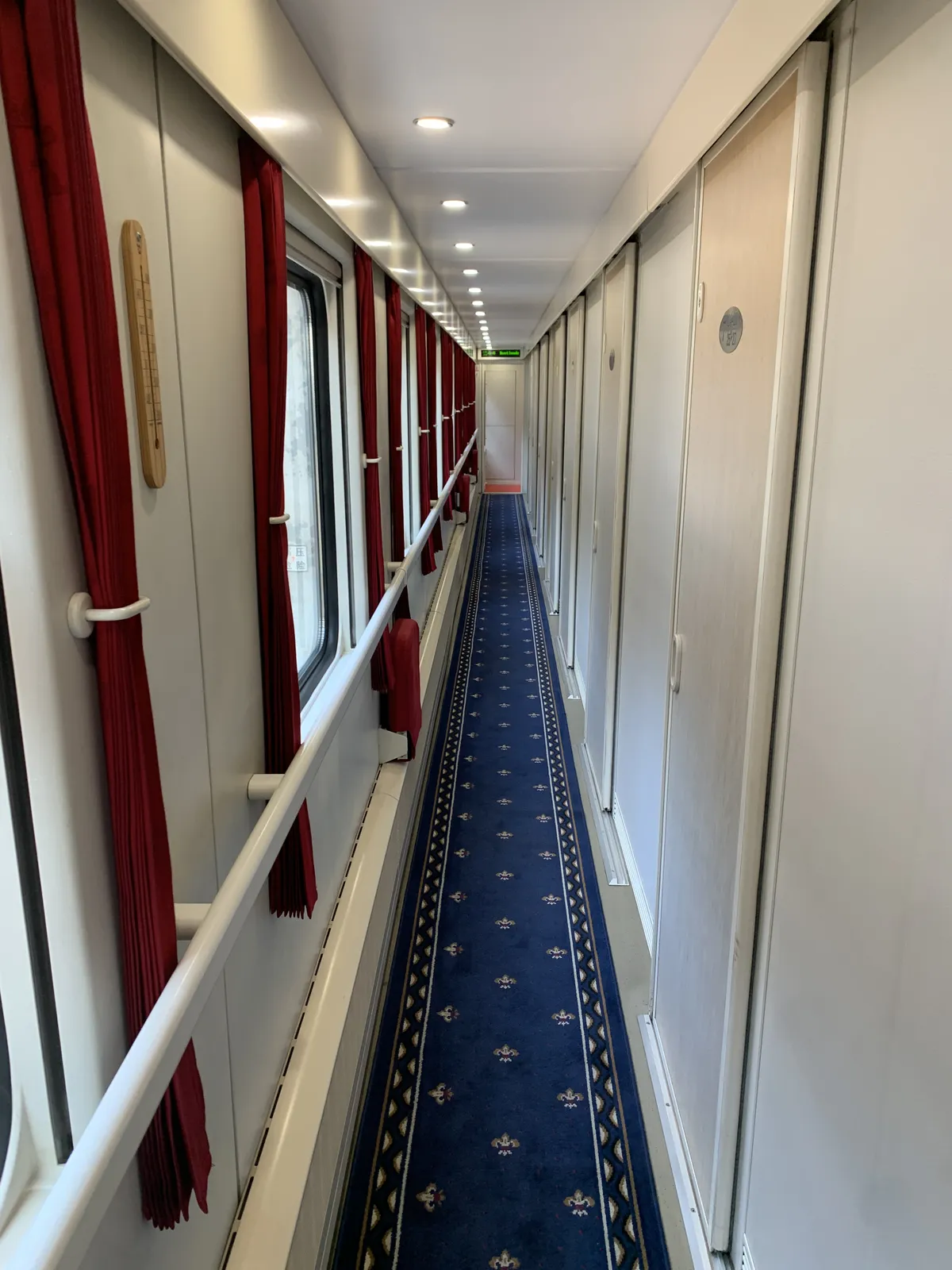 The corridor in our car, full of carpets and curtains
The Dining Car
We ate at the dining car for our dinner on the first night and my partner had breakfast there on the second day. I must say, it was pretty good for train food! For the first leg of the trip, the dining car is a Chinese dining car and serves Chinese food. Once you hit the border, they legit take out this dining car and switch it to a Mongolian dining car (with Mongolian food and staff). While in China, the dining car accepts credit card or Alipay (or cash), while in Mongolia it accepts credit cards and cash. I had read online that this train only accepted cash, but that information was outdated. You can now 100% use credit cards, which is great.
For the first dining car (the Chinese version), they serve breakfast in the morning for around 30 yuan, while lunch (11am-1pm) and dinner (5-7pm) have more options, with plates ranging from 20-50 yuan. We had fish, cabbage, and eggs with peppers for dinner. My partner got a Chinese beer and it was cold! (other reviews noted the beer was warm). The views in the dining car are great and it's a nice place to socialize throughout the day. They also serve coffee in the morning (although I didn’t try it as we made our own). I don't remember the hours for the Mongolian dinning car but I assume its the same.
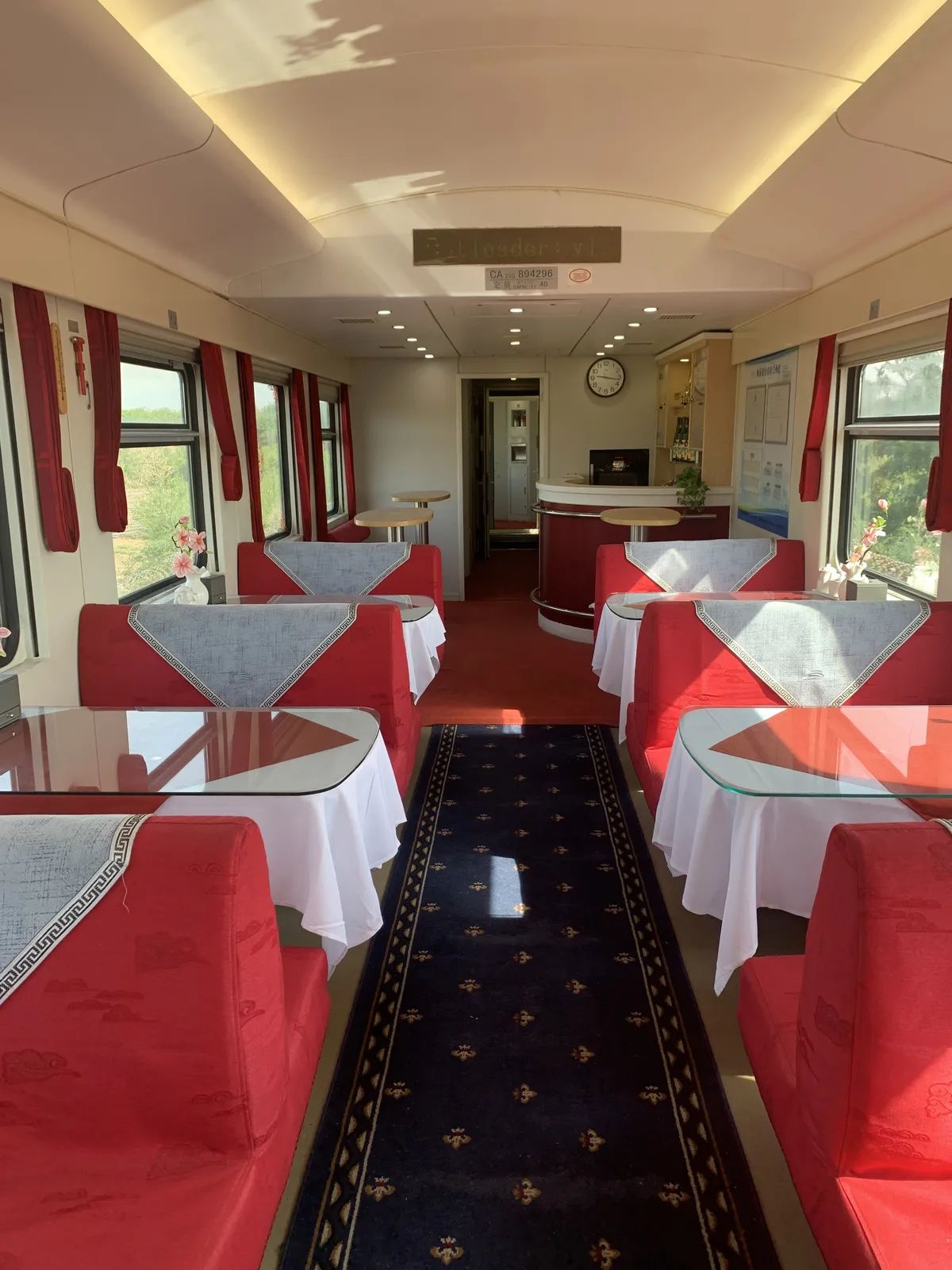 The lovely Chinese dining car
The Experience
For us, the train was likely only 20% booked, so you got to know some others quite well by the end of the 30 hour journey. Our train was mostly foreigners, with a good chunk of German and French people. Most people it seems were going to Mongolia to travel and wanted to experience the train, although the people next to our room were from China and were going to Ulaanbaatar to work (they said flying was a waste as they can't see the scenery!).
The train randomly had so many staff. I wasn’t really sure what their jobs were but it felt like each car had 1-3 staff members (they sleep in the same cars as the guests). On the 2nd day, they cooked their meals in the cars, using the bathroom sinks, which was funny to see (but it smelt so delicious). For us, the staff did not engage with us at all aside from smiling occasionally as you passed them in the hallways. English didn't appear to be spoken much but I think most people could get by.
As this train is usually more expensive and WAY longer than flying, it is definitely an experience in itself, so everyone on the train will likely be there for the train *experience itself. I love moments and spaces like this as it means, while everyone is so different, they all share a common thread of being interested in slow travel by trains. It makes for great conversations and you always meet interesting folk.
The train also provides some beautiful views along the way. Leaving Beijing was exciting as you can truly see the scale of the city. Once you exit the urban core, you are welcomed by the mountains and small lakes that surround the city. I was pretty amazed at this scenery which is so close to Beijing. As you exit the mountains, things start to become pretty rural, with farms and small villages that look more older (and much less wealthy) than areas of Beijing. Towards the afternoon, you will enter Inner Mongolia and things get very vast. Then in Mongolia the land is SO vast and you pass through Gobi Desert. After hours of nothingness, you slowly see gers (yurts) and horses and then some more houses and then apartments popping up as you enter Ulaanbaatar.
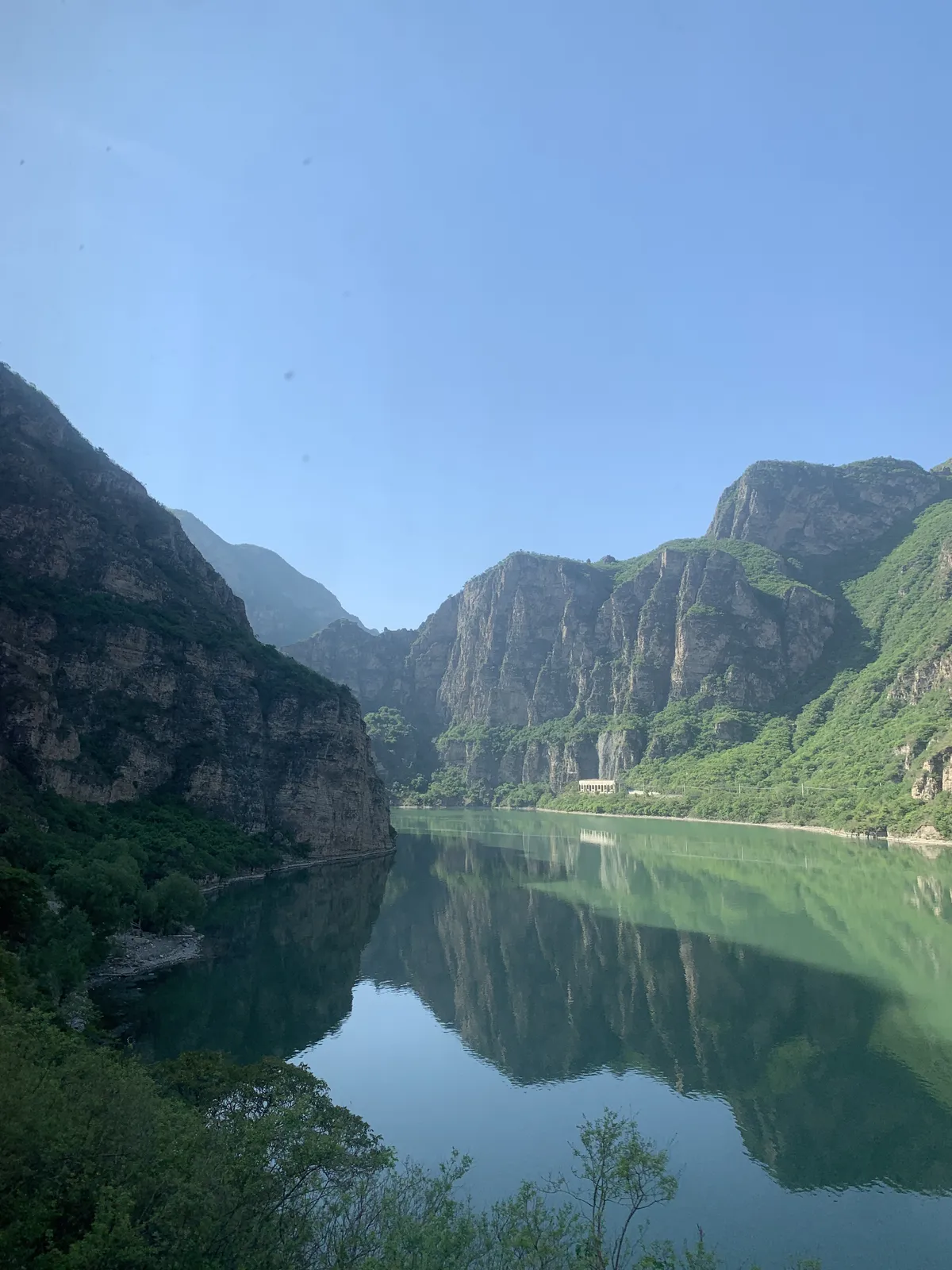 Views from the train of the mountains north of Beijing
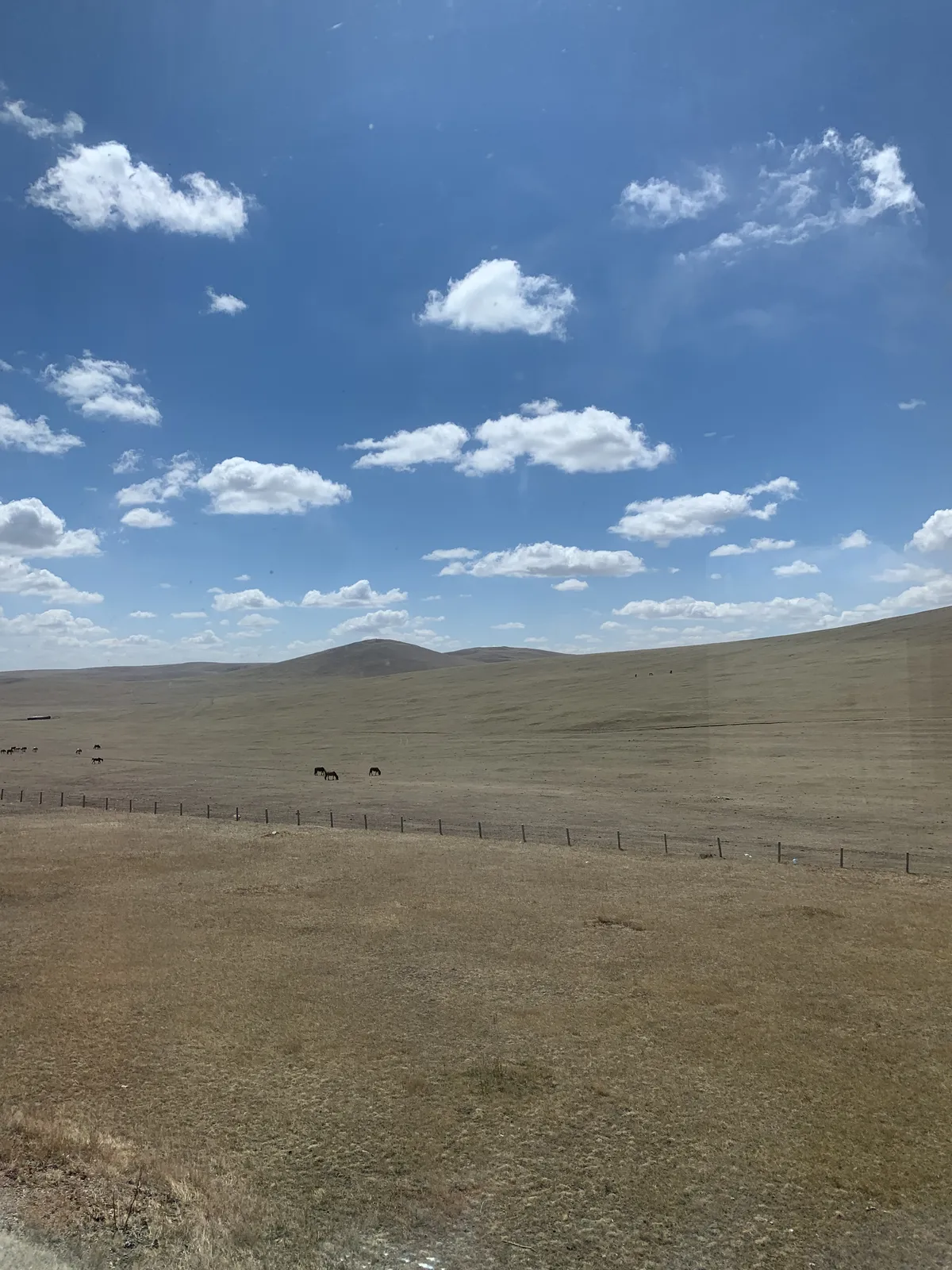 Views from the train of the Mongolian countryside
Crossing the Border
The train makes some short stops along the way, but the two longest stops are at the border crossings. We arrived at Erenhot/Erlian (in China) around 8pm. Everyone must exit the train and bring all of their luggage with them. We had to go through Chinese customs since we were leaving the country. The customs building is massive, feeling more like a small airport rather than a smaller regional train crossing. I believe we were the only people crossing the border at that time, but the space was still were fully staffed. The customs were quick and easy but then you must sit and wait in the customs hall after for 3-4 hours because the train needs to be adjusted to cross the border. This adjustment is because the track gauge (size/width) is different in China and Mongolia and it legit means they have the adjust the wheels on each rail car to match the different track gauge widths in Mongolia. I had read online that you could sit in your room during this procedure but that was not the case for us. It is during this time that they replace the dining car. I noticed that they moved the dining car into a different position in the train too.
While the concept of changing a train's track gauges mid-trip is pretty amazing, the wait in the customs hall isn’t so amazing haha. We had to sit in a resting area with hard seats and bright fluorescent lights. There is thankfully a purified water tap (both hot and water) and bathrooms. There was a tiny shop that was open for the first hour of our arrival that had packs of instant noodles and some drinks. You cannot exit the station while you wait so you are confined to this area. There is lots of room however to stretch if you need but the seats are definitely not great for napping. It is, however, a nice time to socialize with your fellow riders should you have the energy.
Around midnight, we were able to get back into our train. You got back into the same car and berth you had before. The train doesn’t leave until 12:59, so we were able to get some sleep, but then around 1:30 you hit the Mongolian border crossing at Zamyn-Üüd. The border patrol thankfully come into the train and do the customs process with some fancy tablet in your berth. They searched our berth a bit, but the entire process was very quick. We were likely to fall asleep by 2am. The train was a bit bumpy but honestly not too bad for sleeping after all of the stopping!
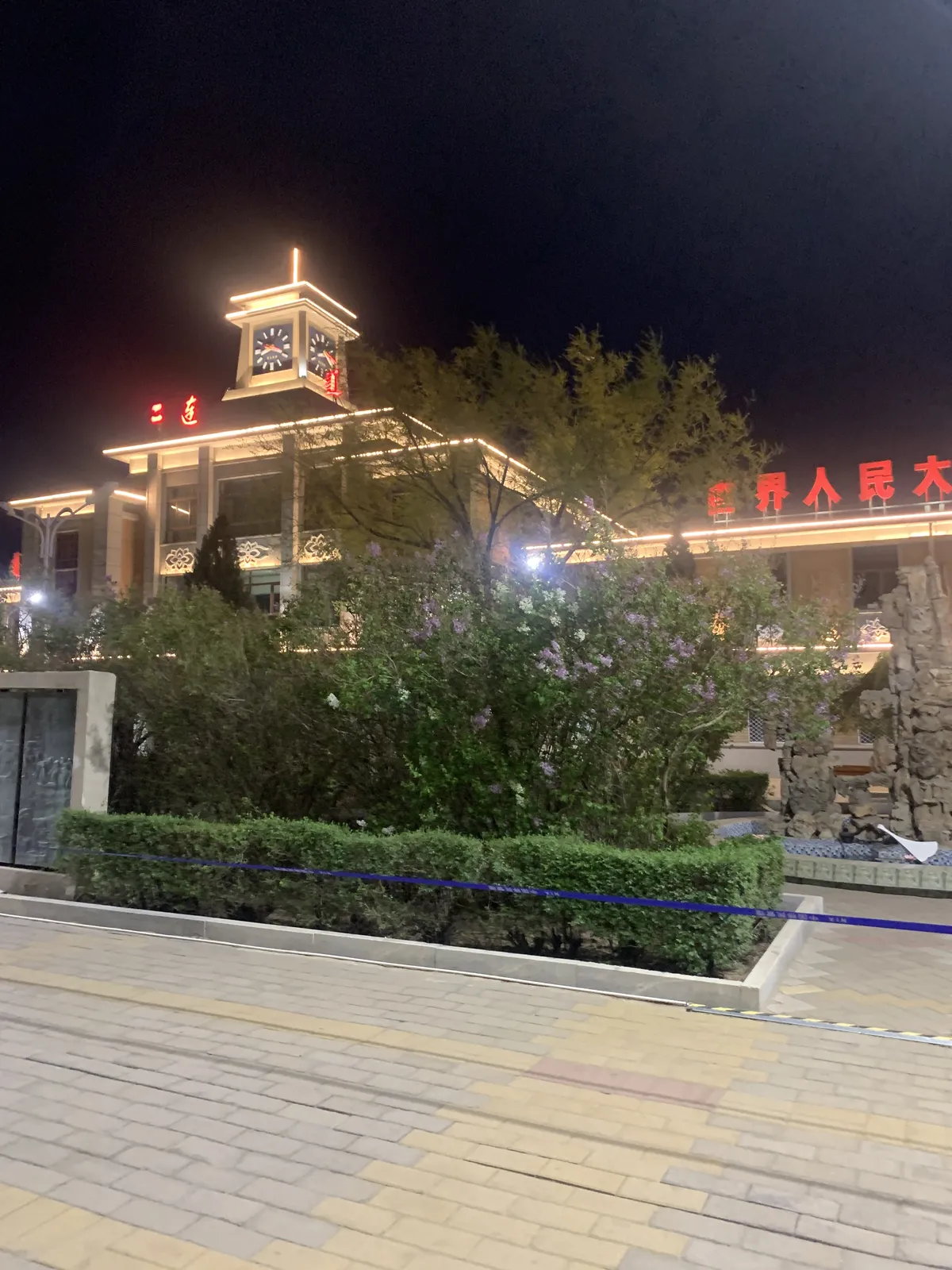 Erlian Train station at night in all of its glory
UB Train Station
We arrived in Ulaanbaatar on time, around 2pm. There are tons of buses you can catch in front of the train station, and they apparently accept credit cards (our bus driver just waved us on). There is also a cafe in the station and a convenience store nearby. We tried to buy a SIM card at the convenience store but they didn’t provide any so we had to go to a cell phone store in town later on. There are taxis available at the station too but we didn’t have any cash (and we were too tired to search for an ATM), so we just took the bus instead.
Would I Recommend the train?
Overall, the train was as promised. It provided beautiful views of China and Mongolia that most people do not see; it allowed us to meet other travelers (with whom we hung out with in UB after); and it gave us a chance to travel slowly, offering a space to read, nap, eat, and chat. Since China now has visa-free travel for 30 days for Canadians and most Europeans, and as does Mongolia, this train is a great way to link seeing two amazing countries.
I would recommend this trip to anyone who enjoys taking trains for the sake of taking trains. If you just want to get UB quickly and cheaply, then I would definitely fly haha!
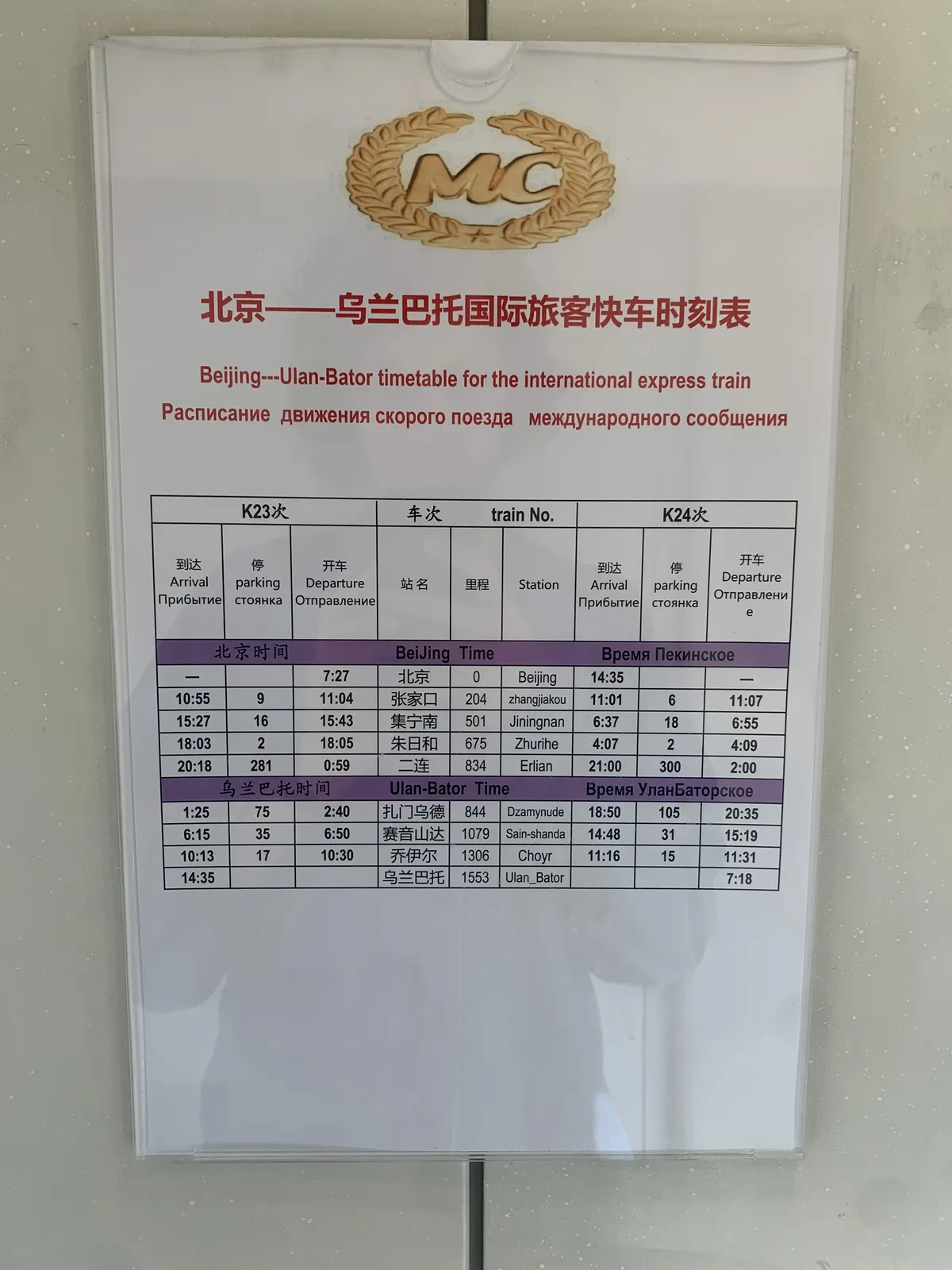 Here's the current train schedule